Allergic to cod or salmon, and wondering about the ray wing on the menu? Rays are cartilaginous fish, like sharks, and their main muscle protein differs from the one in cod, herring and salmon. Our test checks your blood for IgE to whole thornback ray and to ray parvalbumin, as part of 300 allergens and allergen components, next to seven bony fish.
Most fish we eat, such as cod, salmon, herring and tuna, are bony fish. Rays, skates and sharks are cartilaginous fish: their skeleton is cartilage, not bone. They split from bony fish long ago, and their proteins differ more than you might expect.
The main allergen in bony fish is beta-parvalbumin, a small muscle protein. Rays and sharks mainly have alpha-parvalbumin instead. It is a related protein, but antibodies aimed at bony-fish parvalbumin bind it much less.
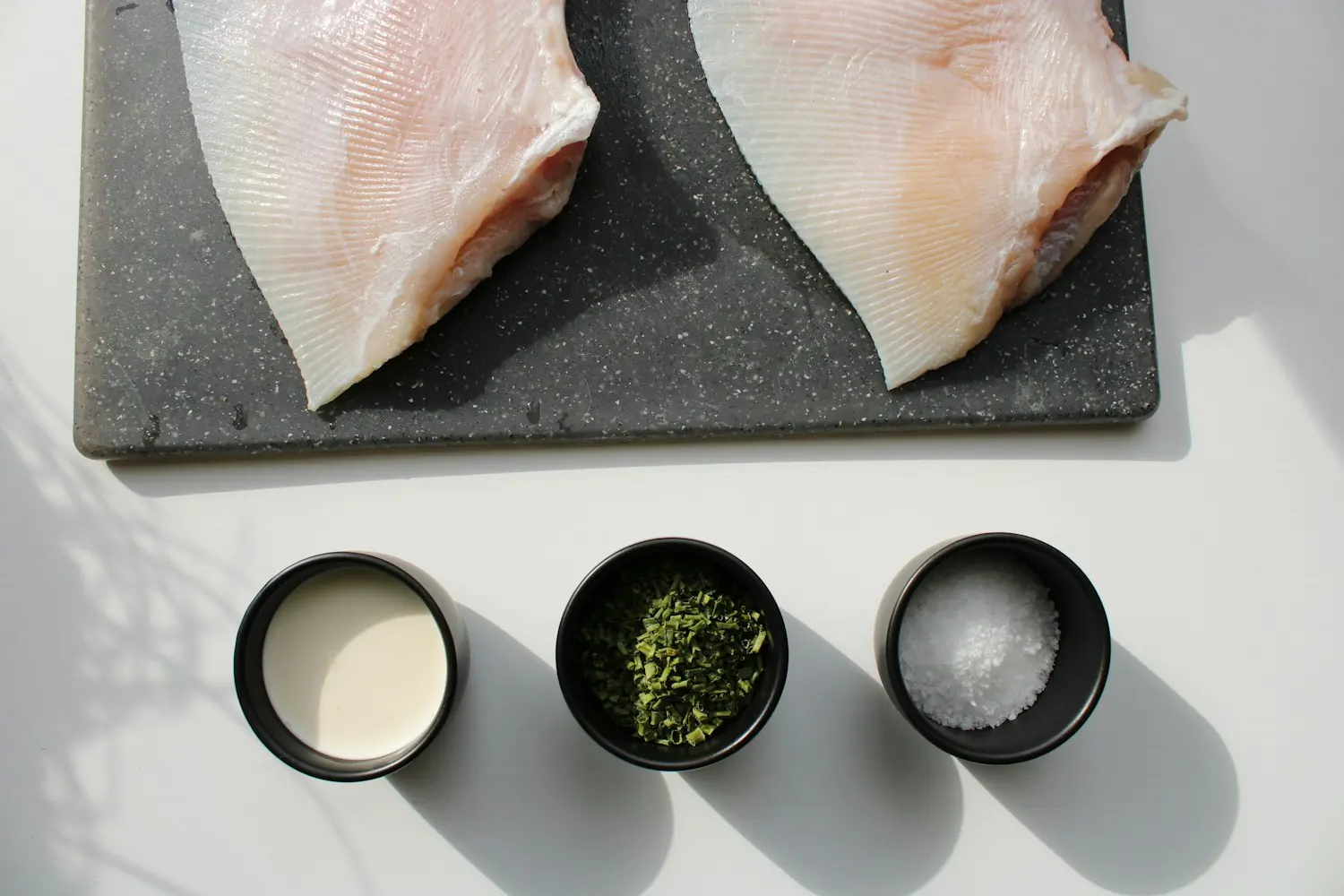
In a 2019 study of people allergic to cod, salmon or both, 10 of 11 tolerated ray in a food challenge or clinical workup. Their IgE to ray and shark parvalbumin was far lower than to bony-fish parvalbumin, and skin and blood cell tests reacted much less.
That makes ray an interesting option to discuss with an allergist if you avoid bony fish. It is not a green light: some people do react to ray, and only a doctor can say if a supervised challenge suits you. A ray result next to your other fish results is a useful starting point for that talk.
Reactions people describe after eating fish include itching in the mouth, hives, swollen lips, stomach cramps, vomiting and wheezing. They usually start within minutes to two hours.
Swelling of the lips, tongue or throat, trouble breathing or feeling faint after eating is an emergency. Call 112 (EU) or your local emergency number. Do not wait for a test.
From a finger-prick sample, the lab measures IgE to a whole thornback ray extract and to ray parvalbumin, a single protein (molecular component). Seven bony fish are on the same panel of 300 allergens and allergen components: cod, salmon, herring, mackerel, tuna, carp and swordfish. So you see ray and bony fish side by side.
Your lab report gives each value a class from Negative to Very high. That shows sensitisation, not a diagnosis. Discuss it with a doctor before you add or remove any fish.
Page last updated
One finger-prick sample checks IgE to 300 allergens and allergen components, from birch and peanut to cat and house dust mite. Post it to the lab, and about 5 days after it arrives you get a value for every one. Our plain-English guide shows you how to read them. €399 in total, €1.33 per allergen.
Some can. In a 2019 study, 10 of 11 people allergic to bony fish tolerated ray, because ray parvalbumin binds their IgE weakly. That is a reason to ask an allergist, not to try it at home. Your ray result next to seven bony fish helps that conversation.
In the kitchen, mostly yes. Skates and rays are close relatives, and the wings sold as skate are often ray, including thornback ray (roker). Both are cartilaginous fish.
Because it behaves differently from bony fish. A low ray result next to high cod or salmon results fits the pattern seen in research. A high ray result is worth knowing too, before anyone suggests ray as an alternative.