Itchy mouth after a tropical fruit salad, or trouble with latex gloves too? Papaya is one of the fruits most often linked to latex, and its enzyme papain turns up in places you would not expect. Our test checks your blood for IgE antibodies to a whole papaya extract, as part of 300 allergens and allergen components including latex, kiwi and banana.
Papaya comes up in allergy in two ways. The first is as a fruit. Papaya is on the list of foods linked to the latex-fruit syndrome, together with banana, avocado and kiwi. People sensitised to natural rubber latex often show IgE to these fruits, because some of their proteins look alike.
The second is papain, a protein-cutting enzyme made from papaya. Industry uses it as a meat tenderiser and in food processing, supplements and cosmetics. Breathing in papain dust at work is a well-documented cause of occupational asthma and rhinitis. Papain belongs to the same enzyme family as actinidin in kiwi (Act d 1), and people sensitised to one sometimes show IgE to the other.
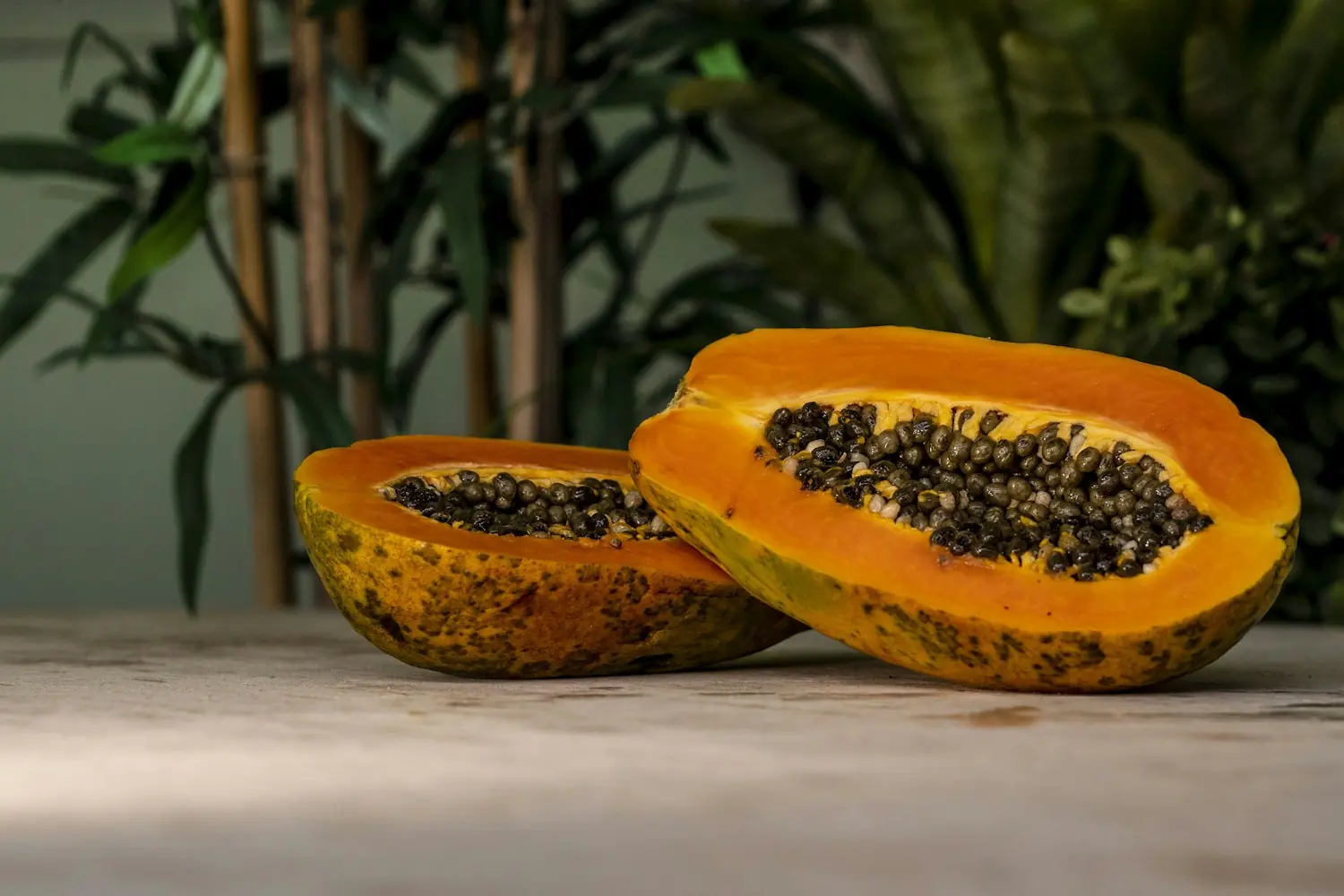
After eating papaya, people describe itching of the mouth and throat, hives or stomach symptoms. People who work with papain powder more often describe a runny nose, sneezing, chest tightness or wheezing at work.
Swelling of the lips, tongue or throat, trouble breathing or feeling faint after eating is an emergency. Call 112 (EU) or your local emergency number. Do not wait for a test.
A positive papaya result shows that your blood has IgE that recognises papaya proteins. It does not tell you that you will react to the fruit, and it does not tell you how strongly.
If latex or kiwi also show up, the papaya result may be part of a wider pattern rather than something specific to papaya. A doctor reads that together with your history of reactions.
Your finger-prick sample goes to the lab, which measures IgE to a whole papaya extract. A whole extract contains the mix of proteins in the fruit, so it shows whether you are sensitised to papaya as a whole, not which single protein your antibodies recognise. Your lab report gives a measured value and class, from Negative to Very high, on the same report as latex, kiwi, banana and avocado. Discuss the result with a doctor before you change what you eat.
Page last updated
One finger-prick sample checks IgE to 300 allergens and allergen components, from birch and peanut to cat and house dust mite. Post it to the lab, and about 5 days after it arrives you get a value for every one. Our plain-English guide shows you how to read them. €399 in total, €1.33 per allergen.
Papaya is one of several fruits, with banana, avocado and kiwi, where people sensitised to latex often show IgE too. This is called the latex-fruit syndrome. The test checks papaya and several latex proteins in the same sample.
Yes. Papain is an enzyme from papaya used as a meat tenderiser and in supplements and cosmetics. Breathing in papain dust at work is a known cause of occupational asthma. If you react at work, tell your doctor or occupational health service.
It is not one of the common food allergies in Europe. It shows up most often in people who are sensitised to latex or who handle papain at work.